- Up to 70% reduction in CO₂ footprint per charge
- The majority of home charging sessions now happen via intelligent charging
- The solution actively contributes to stabilising the electricity grid
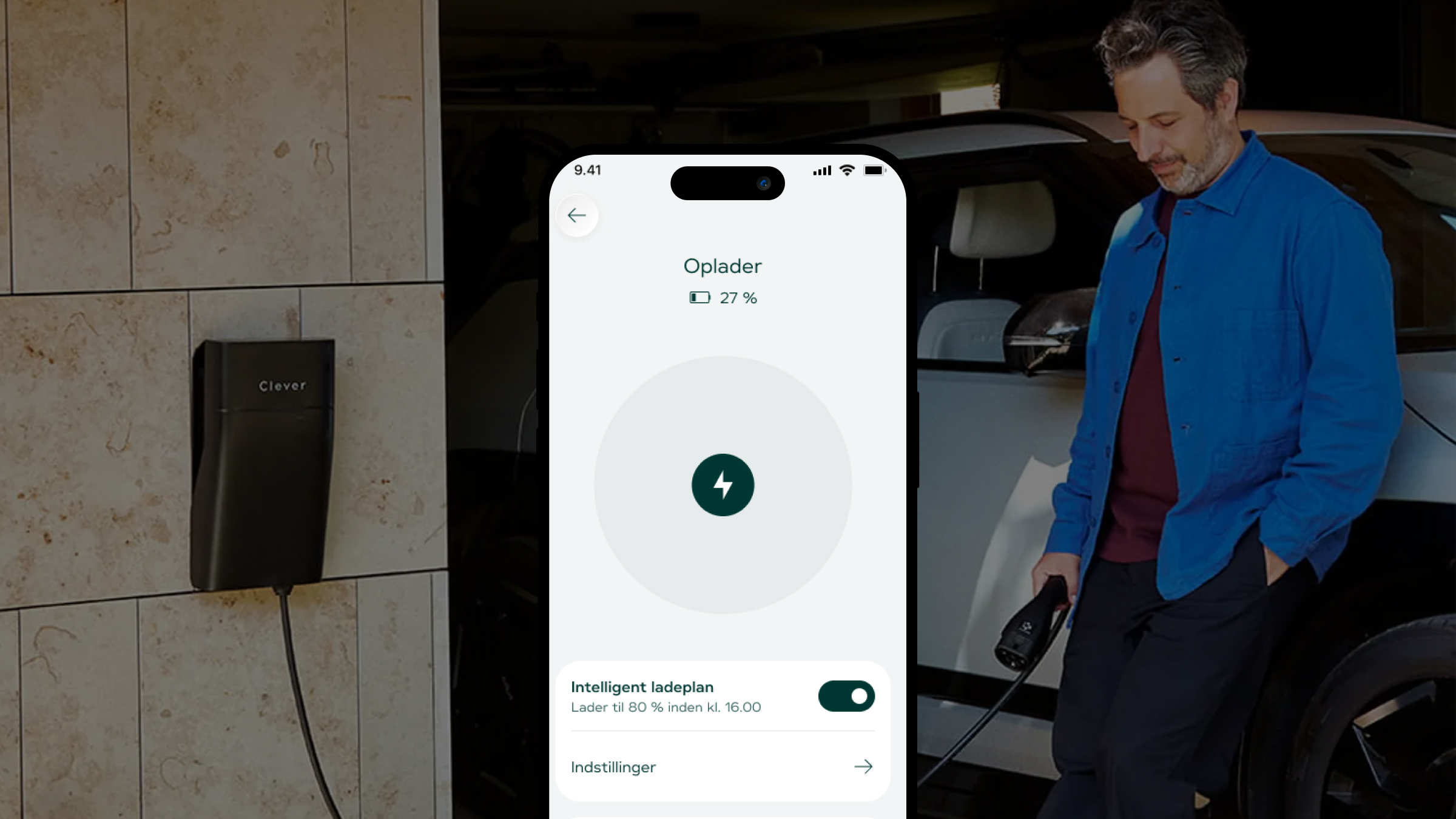
The majority of Clever's home charging sessions now happen through intelligent charging, reducing the CO₂ footprint by up to 70% per charge.
Impact
Context and purpose
Throughout the day, both electricity prices and CO₂ intensity vary significantly. An electric vehicle can easily double a household's electricity consumption, and the potential for shifting usage to the best times of day is enormous.
Our purpose was to give Clever's customers the ability to charge at the best times, for their wallet, for the climate, and for the grid, without making their everyday life more complicated.
The problem we solved
Even motivated users rarely have the time or overview to actively plan when they charge. It requires knowledge of electricity price fluctuations, CO₂ data, and personal driving patterns, information most people simply do not have access to in a busy day.
On top of that, the technological infrastructure in 2021 was not yet mature enough for a fully automated solution. We had a clear vision, but had to build towards it step by step.
Research and insights
We conducted qualitative interviews and observations to understand users' charging habits and attitudes, supplemented by quantitative studies to validate our assumptions at scale.
The central conclusion: automation was not just a feature. It was a prerequisite for the solution to work in practice.
The solution in the Clever app
The vision was clear from the start, but we built towards it in three steps as the technology matured.
My role was to drive user understanding and concept development, and to ensure that throughout the process we stayed true to the research insights. The solution needed to feel invisible and trustworthy, not like a task.
Intelligent charging is an area we continue to refine and improve on an ongoing basis.
What did we learn?